
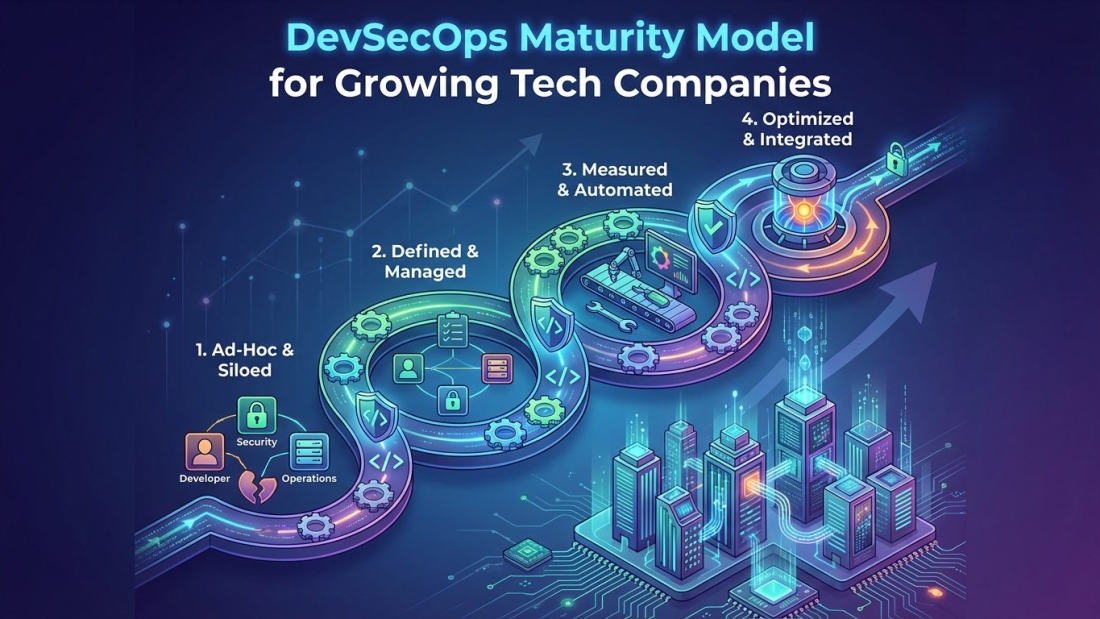
DevSecOps Maturity Model for Growing Tech Companies

Using behavioral analytics to detect insider threats in enterprises

What Are Insider Threats?

Imagine locking every door of your house to keep burglars out, only to realize the real risk comes from someone already inside. That is exactly what insider threats look like in modern organizations. Instead of hackers breaking through firewalls, these threats come from employees, contractors, or partners who already have legitimate access to internal systems. Because they are trusted users, their activities often blend into normal operational behavior, making detection extremely difficult.

Insider threats can take many forms. Sometimes they involve malicious intent, such as an employee stealing sensitive customer data before leaving the company. In other cases, the threat might come from careless behavior, like accidentally sharing confidential files through unsecured channels. Regardless of intent, the damage can be severe. Studies across cybersecurity industries indicate that a large percentage of corporate data breaches involve insiders misusing or mishandling sensitive information.

Traditional cybersecurity tools were designed primarily to stop external attackers. Firewalls, intrusion detection systems, and antivirus tools focus on blocking threats from outside the network. However, insider threats operate within the system using valid credentials and legitimate access privileges. This makes them much harder to identify with conventional security methods. That is why organizations are increasingly adopting behavioral analytics, a smarter and data-driven approach that monitors patterns in user behavior to detect unusual activities.

Why Insider Threats Are Increasing

Over the past decade, the workplace has changed dramatically. Enterprises now rely on cloud platforms, remote work environments, collaboration tools, and digital infrastructure that connects employees from different locations. While these technologies improve productivity, they also create more opportunities for internal misuse or accidental exposure of sensitive information.

One major factor contributing to the rise of insider threats is the increasing number of systems employees interact with daily. A typical worker might access email platforms, file-sharing tools, databases, project management software, and communication apps throughout the day. Each interaction creates digital activity logs, making it extremely difficult for security teams to manually track and analyze behavior patterns.

Another reason insider threats are growing is the widespread adoption of remote work. Employees now access company systems from personal devices, home networks, and public internet connections. This distributed environment makes monitoring activities more complex and increases the risk of compromised accounts or careless actions.

Organizations are also storing more sensitive data than ever before, including intellectual property, customer information, and financial records. With so much valuable data accessible through internal systems, even a single insider incident can result in massive financial and reputational damage. Behavioral analytics helps address this problem by identifying abnormal behavior patterns before they escalate into serious security incidents.


What Is Behavioral Analytics in Cybersecurity?

Core Concept of Behavioral Analytics

Behavioral analytics is a cybersecurity approach that focuses on understanding how users normally interact with systems and identifying unusual behavior that could signal potential threats. Every employee leaves a digital footprint when using enterprise systems. This footprint includes login times, files accessed, applications used, devices connected, and network activity.

Over time, these activities create patterns that represent typical user behavior. Behavioral analytics platforms analyze historical data to establish a baseline of what normal activity looks like for each individual or device. Once this baseline is created, the system continuously monitors current activity and compares it with established patterns.

If a user suddenly performs actions that differ significantly from their usual behavior, the system identifies it as an anomaly. For example, an employee who normally accesses a few documents daily might suddenly attempt to download thousands of files. Similarly, someone who always logs in during office hours might suddenly access the system late at night from an unfamiliar location.

Behavioral analytics does not immediately assume malicious intent when anomalies occur. Instead, it highlights suspicious patterns so that security teams can investigate further. This approach helps organizations detect potential insider threats early and prevent damage before sensitive data is compromised.

How Behavioral Analytics Differs from Traditional Security Tools

Traditional cybersecurity systems operate based on predefined rules and signatures. They detect threats by comparing activities against known attack patterns. If a particular activity matches a rule, the system triggers an alert. While this method works well for identifying known threats, it struggles with unknown or subtle attacks.

Behavioral analytics takes a completely different approach. Instead of relying solely on predefined rules, it focuses on analyzing patterns of behavior. By studying how users typically interact with systems, it can detect unusual activities even when no known attack signature exists.

Another important difference is adaptability. Traditional security tools require constant updates to remain effective against new threats. Behavioral analytics systems, on the other hand, continuously learn and adapt as they process new data. Machine learning algorithms refine behavioral models over time, making detection more accurate and reducing false alerts.

This capability makes behavioral analytics particularly effective against insider threats. Because insiders use legitimate credentials, their actions may appear normal to traditional security systems. Behavioral analytics looks beyond credentials and examines how those credentials are used, providing a deeper level of security monitoring.


The Role of Behavioral Analytics in Insider Threat Detection

Establishing Baseline User Behavior

Detecting insider threats begins with understanding what normal activity looks like within an organization. Behavioral analytics systems gather large amounts of data from different sources, including login records, file access logs, application usage data, and network traffic.

Machine learning algorithms analyze this data to create behavioral profiles for each user. These profiles reflect typical patterns such as working hours, commonly accessed systems, frequency of data transfers, and preferred devices. By establishing these baselines, the system gains a clear understanding of what constitutes normal behavior for each employee.

This process is essential because different roles involve different types of activities. For example, a software developer may regularly access source code repositories, while a financial analyst might work primarily with spreadsheets and financial databases. Behavioral analytics systems account for these role-based differences to ensure accurate monitoring.

As employees continue using enterprise systems, the behavioral models evolve and adapt. If a worker’s responsibilities change or new applications are introduced, the system gradually incorporates these changes into the baseline. This continuous learning ensures that the monitoring process remains relevant and effective over time.

Detecting Behavioral Anomalies

Once baseline behavior is established, behavioral analytics focuses on detecting anomalies. An anomaly occurs when a user performs actions that significantly deviate from their typical behavior patterns. These deviations could indicate malicious activity, compromised credentials, or accidental misuse of sensitive information.

Anomaly detection relies on analyzing multiple factors simultaneously. Instead of evaluating individual events in isolation, behavioral analytics platforms examine the broader context of user activity. For instance, accessing sensitive data might not be unusual for certain employees. However, if that same activity occurs at an unusual time, from a different location, and involves large data transfers, it becomes suspicious.

Modern behavioral analytics systems assign risk scores to detected anomalies. These scores help security teams prioritize investigations based on potential impact. High-risk activities receive immediate attention, while lower-risk anomalies may simply be monitored.

By identifying unusual patterns early, organizations can intervene before a potential insider threat leads to data loss or system compromise. This proactive approach is one of the most valuable advantages of behavioral analytics in enterprise security.


Key Technologies Behind Behavioral Analytics

Machine Learning and Artificial Intelligence

Machine learning and artificial intelligence are the core technologies that power behavioral analytics systems. These technologies enable platforms to analyze vast amounts of data and detect patterns that would be impossible for humans to identify manually.

Machine learning algorithms process historical activity data to establish behavioral baselines. They evaluate variables such as login frequency, file access patterns, network behavior, and device usage. By comparing current activity against historical data, the system can quickly detect unusual actions that may indicate security risks.

Artificial intelligence also improves detection accuracy by continuously learning from new data. When security analysts investigate alerts and determine whether they represent real threats or false positives, the system incorporates this feedback into its models. Over time, this learning process reduces unnecessary alerts and improves detection efficiency.

In large enterprises where millions of system events occur daily, AI-driven behavioral analytics provides the scalability required for effective security monitoring.

User and Entity Behavior Analytics (UEBA)

User and Entity Behavior Analytics (UEBA) is a widely used framework within behavioral analytics. UEBA focuses on monitoring the activities of users, devices, and applications across an organization’s digital environment. Instead of analyzing isolated security events, it evaluates behavioral patterns over extended periods.

UEBA platforms collect data from multiple sources, including identity management systems, endpoint devices, cloud services, and network infrastructure. By correlating these data streams, the platform develops a comprehensive understanding of user activity across the organization.

This holistic view enables security teams to detect threats that might otherwise remain hidden. For example, an attacker who gains access to a legitimate user account might move across different systems while gradually collecting sensitive information. UEBA systems can detect these patterns by analyzing behavior across multiple platforms.

Security Information and Event Management (SIEM) Integration

Behavioral analytics systems are often integrated with Security Information and Event Management (SIEM) platforms. SIEM systems collect and store security-related data from across an organization’s IT infrastructure. This centralized data repository provides valuable input for behavioral analysis.

When behavioral analytics tools integrate with SIEM platforms, they gain access to extensive real-time activity data. This integration allows machine learning models to analyze events across networks, applications, and endpoints simultaneously.

For example, if behavioral analytics detects suspicious user activity, the SIEM platform can correlate that alert with other security events such as login failures or network anomalies. This combined analysis helps security teams understand the full context of potential threats and respond more effectively.


Behavioral Indicators of Insider Threats

Suspicious Data Access Patterns

One of the most common signs of insider threats is unusual data access behavior. Employees generally interact with specific files and systems relevant to their job responsibilities. When someone suddenly begins accessing sensitive data outside their normal scope, it may indicate a potential security risk.

Behavioral analytics systems monitor file access patterns to identify unusual behavior. These systems track how often users access specific documents, how much data they download, and whether they attempt to transfer information outside the organization.

Another indicator is excessive data accumulation. Some malicious insiders gradually collect sensitive documents over time rather than stealing them all at once. Behavioral analytics can detect these slow and subtle patterns by analyzing long-term activity trends.

Unusual Login and Activity Behavior

Login behavior is another key indicator of potential insider threats. Employees usually log in from familiar locations and devices during predictable working hours. When these patterns change dramatically, it may signal suspicious activity.

Behavioral analytics platforms monitor login times, geographic locations, device usage, and session durations. If a user suddenly logs in from an unfamiliar location or begins accessing systems outside normal working hours, the system generates alerts for investigation.

These signals often serve as early warnings of compromised accounts or malicious behavior, allowing organizations to respond quickly and prevent serious incidents.


Types of Insider Threats Behavioral Analytics Can Detect

Malicious Insiders

Malicious insiders intentionally misuse their access privileges to steal data, sabotage systems, or commit fraud. Because they understand internal processes and security policies, they can be extremely difficult to detect.

Behavioral analytics helps identify malicious insiders by analyzing deviations from normal behavior patterns. Activities such as downloading large volumes of sensitive files, accessing systems unrelated to job roles, or attempting to bypass security controls may indicate malicious intent.

Early detection enables organizations to investigate suspicious activities before significant damage occurs.

Negligent or Compromised Users

Not all insider threats involve malicious intent. Many incidents result from negligence or human error. Employees may accidentally share confidential data through insecure channels or ignore security protocols when handling sensitive information.

Behavioral analytics helps detect risky behavior patterns that may indicate careless practices. By identifying repeated policy violations or unusual activities, organizations can address potential problems through training or policy enforcement.

Compromised accounts represent another category of insider threats. Cybercriminals often gain access to legitimate user credentials through phishing attacks or password theft. Once inside the network, they attempt to move laterally and access valuable information.

Behavioral analytics detects these incidents by identifying behavior that differs from the normal activity patterns associated with the compromised account.


Benefits of Using Behavioral Analytics in Enterprises

Implementing behavioral analytics offers several advantages for enterprise cybersecurity. One of the most significant benefits is improved threat detection. By analyzing behavior patterns instead of relying solely on predefined rules, organizations can detect sophisticated insider threats that might otherwise go unnoticed.

Another advantage is faster incident detection. Behavioral analytics systems can identify suspicious activities early in the attack lifecycle, allowing security teams to respond before major damage occurs.

Behavioral analytics also enhances visibility across complex IT environments. By monitoring activity across multiple systems and platforms, it provides security teams with a comprehensive understanding of how users interact with corporate resources.

This improved visibility supports risk-based security strategies, enabling organizations to prioritize threats and allocate resources more effectively.


Challenges and Ethical Considerations

Despite its benefits, behavioral analytics presents several challenges. Privacy concerns are among the most important issues organizations must address. Monitoring user behavior may raise concerns among employees about workplace surveillance.

To address these concerns, organizations should implement transparent policies that clearly explain how monitoring systems work and what data is collected. Ensuring compliance with privacy regulations is also essential.

Another challenge involves false positives. Behavioral analytics systems may occasionally flag legitimate activities as suspicious. Excessive alerts can overwhelm security teams and reduce operational efficiency.

Continuous tuning of detection models and human oversight are necessary to maintain accuracy and reliability.


Best Practices for Implementing Behavioral Analytics

Successful implementation of behavioral analytics requires careful planning. Organizations should begin by identifying critical systems and sensitive data that require the highest level of protection.

Integrating behavioral analytics with existing security tools is also essential. Combining analytics platforms with SIEM systems, identity management solutions, and endpoint security tools creates a more comprehensive security ecosystem.

Continuous monitoring and regular updates are also necessary. Behavioral models must adapt to changes in user behavior, organizational structures, and evolving cyber threats.

Employee awareness programs can further strengthen security efforts by educating staff about cybersecurity risks and responsible data handling practices.


The Future of Behavioral Analytics in Cybersecurity

The future of behavioral analytics is closely tied to advancements in artificial intelligence and machine learning. As these technologies continue to evolve, behavioral analytics systems will become even more sophisticated in identifying subtle behavioral patterns and predicting potential threats.

Integration with emerging security frameworks such as Zero Trust architecture will also expand the role of behavioral analytics. In a Zero Trust environment, access decisions are continuously evaluated based on risk levels and user behavior.

As organizations continue adopting cloud technologies and remote work models, behavioral analytics will become an essential component of enterprise cybersecurity strategies.


Conclusion

Insider threats remain one of the most complex challenges in enterprise cybersecurity. Unlike external attacks, these threats originate from individuals who already have legitimate access to organizational systems. Traditional security tools alone are often insufficient to detect such risks.

Behavioral analytics provides a powerful solution by analyzing patterns of user activity and identifying anomalies that may indicate potential threats. Through technologies such as machine learning, artificial intelligence, and UEBA frameworks, organizations can gain deeper visibility into user behavior and detect suspicious activities early.

By implementing behavioral analytics alongside other cybersecurity measures, enterprises can significantly strengthen their ability to protect sensitive data and prevent insider incidents.

How to secure SCADA systems from modern cyber threats

How to secure SCADA systems from modern cyber threats

What is a SCADA System?

Supervisory Control and Data Acquisition (SCADA) systems act as the central nervous system of modern industrial operations. These systems are designed to monitor, control, and automate complex industrial processes across large geographic areas. Industries such as power generation, water treatment, oil and gas production, manufacturing, and transportation rely heavily on SCADA to maintain efficiency and operational safety.

A typical SCADA environment includes several interconnected components. Sensors collect real-time data from equipment and processes. Programmable Logic Controllers (PLCs) and Remote Terminal Units (RTUs) interpret this data and execute commands. Communication networks transfer information between devices, while Human Machine Interfaces (HMIs) allow operators to visualize and control operations from centralized control rooms.

Imagine a massive power grid stretching across multiple cities. Engineers cannot manually monitor every transformer, pipeline, or generator. SCADA systems make this possible by continuously collecting operational data and allowing remote control of equipment. When pressure levels change or temperatures rise, the system immediately alerts operators and can even automate corrective actions.

However, the same connectivity that allows SCADA systems to manage large infrastructures also introduces cybersecurity risks. Many industrial systems were originally designed with reliability and performance in mind rather than digital security. As industries connect these systems to corporate networks and remote monitoring platforms, they become exposed to modern cyber threats that did not exist when they were first deployed.

Why SCADA Systems Are Critical Infrastructure

SCADA systems form the backbone of many essential services that societies depend on every day. Electricity distribution networks, water treatment plants, railway signaling systems, and oil refineries all depend on SCADA technology to operate safely and efficiently. Because these systems directly control physical infrastructure, any compromise could lead to serious operational disruptions.

The importance of SCADA security becomes clear when considering how many people rely on these systems. A disruption in a power grid could affect millions of households and businesses. Manipulation of water treatment systems could threaten public health. Industrial facilities could face production shutdowns or equipment damage if control systems are compromised.

Governments and security organizations classify these systems as critical infrastructure due to their importance to national security and economic stability. Attackers often target these environments because successful intrusions can produce significant real-world impact. Unlike typical cyberattacks that focus on stealing data, attacks on industrial control systems can influence physical processes.

As digital transformation accelerates, industries increasingly integrate SCADA networks with cloud services, remote monitoring tools, and analytics platforms. While these technologies bring efficiency and improved data insights, they also expand the potential attack surface. This shift means organizations must adopt stronger cybersecurity strategies to protect operational technology environments.


The Growing Cyber Threat Landscape for SCADA

Rising Attacks on Industrial Control Systems

Cyber threats targeting industrial environments have increased significantly over the past decade. Attackers now recognize that operational technology networks often contain valuable targets with weaker security protections compared to corporate IT systems. Criminal groups, hacktivists, and nation-state actors have all demonstrated interest in compromising industrial control systems.

Several factors contribute to the growing threat landscape. Many industrial networks rely on legacy devices that were never designed to handle modern cybersecurity threats. These devices may lack encryption, authentication mechanisms, or security logging capabilities. Once attackers gain access to such environments, they may move laterally across systems with minimal resistance.

Another reason for increased attacks is the rapid digitalization of industrial infrastructure. Organizations now connect control systems to external networks for remote maintenance, predictive analytics, and centralized monitoring. While this improves operational efficiency, it also creates entry points that attackers can exploit through phishing campaigns, malware, or compromised credentials.

The financial impact of cyberattacks on industrial environments can be enormous. Downtime in large manufacturing plants or energy facilities can cost millions of dollars per hour. In some cases, attackers deploy ransomware specifically designed to disrupt industrial operations until organizations pay large ransom demands.

Security experts increasingly warn that industrial cyber threats are evolving toward more targeted and sophisticated attacks. Instead of broad malware campaigns, attackers now develop tools specifically designed to interact with industrial protocols and control systems.

Real-World SCADA Cyberattack Examples

Cyber incidents involving industrial control systems have occurred across various sectors, demonstrating the real risks associated with inadequate SCADA security. In several high-profile cases, attackers gained access to control networks and manipulated operational processes.

In one well-known incident involving critical infrastructure, attackers infiltrated a power distribution network and disrupted electricity supply to thousands of customers. The attackers used malicious software designed to interact directly with industrial control systems. This attack demonstrated how cyber intrusions could directly impact physical infrastructure and public services.

Water treatment facilities have also been targeted. In certain incidents, unauthorized users attempted to alter chemical levels within water treatment processes. Although operators detected and stopped the intrusion before major damage occurred, the attack revealed how vulnerable industrial control systems can be when proper security measures are not in place.

Manufacturing facilities have experienced cyber incidents as well. Some attacks targeted production lines by manipulating programmable controllers and halting automated processes. These disruptions caused significant financial losses due to downtime, equipment damage, and delayed product delivery.

These incidents highlight an important lesson: cyber threats targeting industrial systems are no longer theoretical scenarios. They represent real risks that can disrupt critical operations, damage equipment, and threaten public safety.


Major Vulnerabilities in SCADA Environments

Legacy Systems and Outdated Software

One of the most common vulnerabilities in SCADA environments is the continued use of legacy systems and outdated software. Industrial control systems are often designed to operate for decades without major upgrades. While this long lifespan helps maintain operational stability, it can also create significant cybersecurity challenges.

Older industrial devices may run operating systems or firmware that no longer receive security updates. Vulnerabilities discovered in these systems may remain unpatched because replacing or upgrading the equipment could interrupt critical operations. As a result, organizations sometimes continue using insecure systems simply to avoid downtime.

Attackers frequently exploit these outdated technologies. Known vulnerabilities can allow unauthorized access, remote command execution, or manipulation of system processes. Once inside the network, attackers can move between connected devices and expand their control over the environment.

Another issue involves proprietary industrial protocols that were never designed with encryption or authentication features. Data transmitted between devices may be visible or modifiable by attackers who intercept network traffic.

Organizations must address these vulnerabilities through careful risk management strategies. Even if replacing legacy systems is not immediately possible, security controls such as network segmentation, monitoring, and access restrictions can help reduce exposure.

Weak Authentication and Poor Access Control

Authentication weaknesses remain one of the most significant security issues in industrial environments. Many SCADA systems still rely on default passwords, shared accounts, or simple login credentials. These practices may simplify system management but significantly increase the risk of unauthorized access.

When multiple operators share the same login credentials, it becomes difficult to track user activities or detect suspicious behavior. If attackers obtain these credentials through phishing or malware, they may gain unrestricted access to critical systems.

Another common problem is excessive user privileges. Some organizations grant employees broad administrative access even when their roles do not require it. This approach violates the principle of least privilege and increases the damage potential if an account becomes compromised.

Remote access also introduces risk when proper security controls are missing. Maintenance engineers and vendors often require remote access to industrial systems for troubleshooting or updates. Without secure authentication methods, attackers can exploit remote access portals to infiltrate networks.

Implementing strong identity management practices is essential. Multi-factor authentication, role-based access control, and strict password policies can dramatically reduce the likelihood of unauthorized system access.

Human Errors and Social Engineering

Human behavior plays a major role in many cybersecurity incidents. Even the most advanced security technologies cannot prevent mistakes made by employees who lack cybersecurity awareness. Phishing emails, malicious attachments, and social engineering attacks often serve as entry points for attackers targeting industrial environments.

Employees working in operational technology roles typically focus on maintaining equipment performance and system reliability. Cybersecurity training may not be part of their regular professional development. As a result, they may not recognize common attack techniques used by cybercriminals.

Social engineering attacks exploit trust and human curiosity. Attackers might impersonate technical support staff, vendors, or managers to convince employees to share login credentials or install unauthorized software. In some cases, attackers simply rely on employees clicking malicious links that install malware on connected computers.

Unauthorized devices also present risks. Workers may connect personal laptops, USB drives, or mobile devices to industrial networks without realizing the potential security implications. These devices could introduce malware or create additional network entry points.

Organizations must address human vulnerabilities through regular training, awareness programs, and clear security policies. When employees understand cyber threats and how to respond to them, the overall resilience of the organization improves significantly.


Key Strategies to Secure SCADA Systems

Network Segmentation and Isolation

Network segmentation is one of the most effective strategies for protecting SCADA environments. Instead of placing industrial control systems on the same network as office computers and corporate IT systems, organizations should divide their networks into separate security zones.

This approach limits the ability of attackers to move freely across systems. Even if attackers gain access to one segment of the network, they cannot easily reach critical control systems without passing through additional security barriers.

Industrial networks often use a layered architecture that separates business networks, operational technology networks, and field devices. Firewalls and access control systems regulate communication between these layers.

In highly sensitive environments, organizations may implement air-gapped systems that remain physically isolated from external networks. While complete isolation is not always practical, reducing connectivity significantly decreases the potential attack surface.

Proper segmentation also improves monitoring capabilities. Security teams can analyze traffic flowing between network zones and quickly detect abnormal communication patterns.

Strong Authentication and Identity Management

Modern industrial cybersecurity strategies emphasize strong authentication and identity management. Every user, device, and application interacting with a SCADA system should be verified before gaining access.

Multi-factor authentication adds an additional layer of protection by requiring users to provide more than one form of verification. Even if attackers obtain a password, they cannot access the system without the additional authentication factor.

Role-based access control ensures that users only have access to the systems and data required for their responsibilities. This approach minimizes the risk of accidental system changes and limits the damage potential if an account is compromised.

Privileged access management tools help control and monitor accounts with administrative privileges. These tools record activity logs and enforce strict security policies for high-level system access.

Continuous Monitoring and Intrusion Detection

Continuous monitoring plays a critical role in detecting cyber threats before they escalate into major incidents. Industrial intrusion detection systems analyze network traffic and system activity to identify suspicious patterns.

Unlike traditional IT networks, industrial systems use specialized communication protocols. Security monitoring tools must therefore understand these protocols to accurately detect abnormal commands or unauthorized device interactions.

Behavioral monitoring techniques analyze normal operational patterns and trigger alerts when deviations occur. For example, if a controller suddenly receives commands at unusual times or from unknown devices, the system can alert security teams for investigation.

Real-time monitoring allows organizations to respond quickly to potential security incidents. Early detection significantly reduces the likelihood of attackers gaining long-term control over industrial environments.

Regular Patch Management and Updates

Maintaining updated software and firmware is essential for reducing vulnerabilities in SCADA systems. Patch management programs ensure that security updates are tested and deployed in a controlled manner.

Industrial organizations often test patches in isolated environments before applying them to production systems. This process helps verify that updates will not disrupt operational processes.

Scheduled maintenance windows allow teams to apply updates without interfering with critical operations. After updates are deployed, monitoring systems verify that the environment continues functioning correctly.

Although updating industrial systems can be complex, ignoring known vulnerabilities creates significant security risks. A structured patch management program helps balance operational stability with cybersecurity protection.


Advanced Security Technologies for SCADA

AI and Machine Learning in SCADA Security

Artificial intelligence and machine learning technologies are becoming valuable tools for protecting industrial environments. These technologies analyze massive volumes of operational data to detect subtle anomalies that traditional security systems might miss.

Machine learning models can study normal operational patterns within industrial systems. When unusual behavior appears, such as unexpected commands or abnormal sensor readings, the system generates alerts for investigation.

AI-driven security platforms can also automate certain response actions. If suspicious activity is detected, the system might automatically isolate affected devices or block malicious network traffic. This rapid response capability helps prevent attackers from expanding their access.

Another advantage of AI-based security is predictive analysis. By studying historical data and threat patterns, these systems can identify vulnerabilities and recommend preventative actions before incidents occur.

Zero Trust Architecture for Industrial Networks

The Zero Trust security model is gaining attention as an effective approach for protecting complex networks. Instead of assuming that internal network users are trustworthy, Zero Trust requires continuous verification for every device and user requesting access.

In a Zero Trust architecture, authentication and authorization checks occur whenever systems attempt to communicate. Devices must prove their identity before accessing resources, even if they are already inside the network.

This approach significantly reduces the risk of lateral movement within networks. Attackers who compromise one device cannot easily access other systems without passing additional security checks.

Implementing Zero Trust in industrial environments requires careful planning. Organizations must evaluate communication patterns between devices and design access policies that maintain operational efficiency while improving security.


Best Practices for SCADA Cybersecurity

Security Training for Operators and Engineers

Employee awareness remains one of the strongest defenses against cyber threats. Organizations should provide regular cybersecurity training tailored specifically for industrial environments.

Training programs should cover topics such as phishing recognition, secure password practices, safe device usage, and proper reporting procedures for suspicious activity. Employees must understand how their actions can influence the security of critical infrastructure.

Interactive training methods often produce the best results. Simulated phishing exercises allow employees to practice identifying suspicious emails in realistic scenarios. These exercises help reinforce security awareness and encourage proactive behavior.

When operators and engineers understand cybersecurity risks, they become active participants in protecting the organization’s infrastructure.

Incident Response and Disaster Recovery Planning

Even with strong security defenses, organizations must prepare for potential cyber incidents. Incident response planning ensures that teams know exactly how to respond when security events occur.

A comprehensive incident response plan outlines procedures for detecting attacks, isolating affected systems, and restoring operations. Clear communication channels help coordinate responses across technical teams, management, and external partners.

Disaster recovery planning focuses on maintaining operational continuity after major disruptions. Backup systems, redundant infrastructure, and data recovery procedures enable organizations to restore services quickly.

Regular testing of incident response plans ensures that teams remain prepared for real-world scenarios.


The Future of SCADA Security

Industrial environments are evolving rapidly as technologies such as the Industrial Internet of Things, cloud analytics, and smart infrastructure become more common. These innovations improve efficiency and enable new capabilities but also introduce additional cybersecurity challenges.

Future SCADA security strategies will rely heavily on automation, advanced monitoring systems, and collaborative threat intelligence sharing across industries. Governments and industry groups are also developing stronger security frameworks to protect critical infrastructure.

Organizations that invest in proactive cybersecurity measures today will be better positioned to handle the evolving threat landscape. A combination of advanced technologies, strong policies, and trained personnel will define the next generation of industrial cybersecurity.


Conclusion

SCADA systems control some of the most important infrastructure in modern society. From electricity distribution to water treatment and industrial manufacturing, these systems ensure that essential services operate safely and efficiently.

At the same time, cyber threats targeting industrial environments are becoming increasingly sophisticated. Attackers recognize that disrupting operational technology networks can produce significant real-world consequences.

Protecting SCADA systems requires a multi-layered cybersecurity approach. Organizations must combine network segmentation, strong authentication, continuous monitoring, and effective patch management with employee training and incident response planning.

By adopting modern security technologies and proactive defense strategies, industries can strengthen the resilience of their control systems and ensure the safe operation of critical infrastructure in an increasingly connected world.

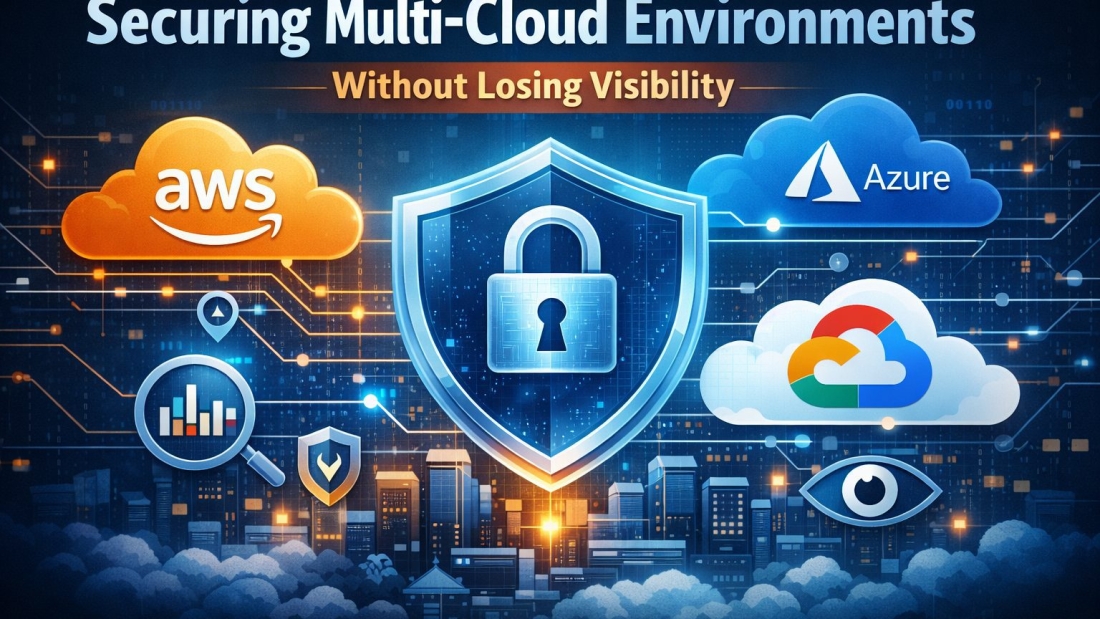
Securing Multi-Cloud Environments Without Losing Visibility

Securing Multi-Cloud Environments Without Losing Visibility

Multi-cloud environments are no longer experimental. They are now part of everyday enterprise IT strategy. Companies rely on multiple cloud providers to avoid vendor lock-in, improve resilience, optimize costs, and leverage best-in-class services. But as organizations expand across platforms, one serious issue emerges: visibility gaps. When logs, alerts, configurations, and user permissions are scattered across different providers, security teams struggle to see the full picture.

Think of it like managing security across multiple office buildings in different cities without a central control room. Each building has cameras and guards, but none of them share information. If something suspicious happens in one location, you may not detect patterns forming elsewhere. That is exactly how security risks grow inside multi-cloud environments. Without unified oversight, even small misconfigurations can escalate into major breaches.

This guide walks you through how to secure multi-cloud environments without losing visibility. You will learn how to unify monitoring, implement Zero Trust principles, centralize identity management, automate compliance, and create resilient disaster recovery plans. Let’s break it down step by step.


Understanding Multi-Cloud Environments

What Exactly Is Multi-Cloud?

Multi-cloud refers to the use of two or more cloud computing services from different providers. A company might run analytics on one platform, host applications on another, and store backups somewhere else entirely. This strategy allows businesses to choose the strongest features from each provider instead of relying on a single vendor.

While this flexibility brings operational advantages, it also introduces complexity. Each cloud provider has its own security tools, identity systems, logging formats, and configuration models. Security teams must understand and manage all of them simultaneously. When policies are inconsistent across platforms, it becomes difficult to enforce uniform controls. Visibility begins to fragment, and that fragmentation becomes fertile ground for risk.

Multi-cloud does not automatically mean insecure. The challenge lies in coordination. Without a deliberate strategy to unify monitoring and governance, organizations can lose track of assets, permissions, and exposures. Security becomes reactive rather than proactive.

Why Businesses Choose Multi-Cloud

Organizations adopt multi-cloud strategies for practical reasons. First, it reduces dependency on a single provider. If one platform experiences downtime or price increases, workloads can shift elsewhere. Second, different providers specialize in different services. Some offer stronger AI capabilities, others better analytics or global reach.

Regulatory compliance is another major driver. Certain industries require geographic data storage or specific certifications. Running workloads across different clouds helps meet regional compliance requirements more effectively. However, regulatory complexity also increases. Each cloud environment must adhere to security standards, and maintaining compliance visibility across all platforms becomes essential.

Cost optimization plays a role as well. Companies compare pricing structures and choose providers strategically for storage, compute, or networking. But managing financial optimization across clouds often overshadows security oversight. Without unified governance, cost efficiency can unintentionally create security blind spots.


The Visibility Challenge in Multi-Cloud Security

Fragmented Monitoring Tools

Each cloud provider offers its own native monitoring tools. While these tools are powerful individually, they are not designed to provide seamless cross-cloud integration. Security teams often end up switching between dashboards, exporting logs manually, and correlating alerts by hand.

This fragmented monitoring structure creates delays in threat detection. If suspicious behavior appears in one cloud and related activity happens in another, identifying that connection can take hours or days. In cybersecurity, time is everything. The longer it takes to detect a breach, the more damage attackers can cause.

The lack of standardization also contributes to confusion. Log formats differ. Alert severities vary. Access control policies operate under different terminologies. Without a unified monitoring approach, teams struggle to maintain a comprehensive, real-time overview of their entire infrastructure.

Siloed Logs and Alerts

When logs are siloed, incident response becomes inefficient. Security analysts must investigate multiple systems separately before understanding the scope of a threat. This slows down containment and remediation.

Alert fatigue becomes another problem. Each provider generates its own notifications. Analysts receive overlapping warnings that may or may not be related. Distinguishing real threats from noise becomes difficult. As a result, important signals can be overlooked.

Centralized logging solves this by consolidating telemetry data into one system. Correlating events across clouds helps detect patterns early. Instead of reacting to isolated incidents, teams can identify coordinated attack behavior and respond decisively.


Core Security Risks When Visibility Is Lost

Misconfigurations Across Clouds

Misconfigurations remain one of the leading causes of cloud breaches. Storage buckets left publicly accessible, overly permissive firewall rules, or disabled encryption settings can expose sensitive data. In a multi-cloud environment, these misconfigurations multiply because each provider has its own configuration standards.

Without centralized visibility, it is easy to miss configuration drift. A policy enforced in one cloud might not exist in another. As teams scale quickly, small inconsistencies accumulate. Attackers often scan for precisely these weak points.

Automated configuration scanning tools can detect vulnerabilities, but they must operate across all platforms. Manual auditing is insufficient. Consistency is key, and that consistency depends on centralized oversight and automation.

Identity and Access Chaos

Identity and access management becomes significantly more complex in multi-cloud deployments. Users may have separate credentials for each provider. Permissions might differ between environments. Without synchronization, access control becomes inconsistent.

Overprivileged accounts are particularly dangerous. If a compromised user has administrative access in multiple clouds, the impact of a breach expands dramatically. Visibility into user activity across platforms is critical for detecting unusual behavior.

Federated identity systems and centralized access policies reduce this risk. When authentication and authorization are unified, monitoring becomes simpler. You can track user behavior across environments and enforce consistent security standards.


Centralized Monitoring as the Foundation

Unified SIEM Platforms

A centralized Security Information and Event Management (SIEM) platform acts as the backbone of multi-cloud visibility. It aggregates logs from every provider, normalizes them, and enables real-time correlation.

With unified monitoring, analysts gain a single source of truth. Suspicious login attempts, configuration changes, and network anomalies appear in one dashboard. This drastically improves detection speed and investigative efficiency.

Modern SIEM solutions also leverage machine learning to identify anomalies that humans might overlook. By analyzing behavior patterns across clouds, they can detect subtle deviations that indicate compromise. Centralization transforms fragmented data into actionable intelligence.

Cross-Cloud Dashboards

Cross-cloud dashboards provide operational clarity. They display system health, compliance status, user activity, and threat indicators in a unified interface. Instead of juggling multiple consoles, teams operate from a centralized command center.

This visibility supports strategic decision-making. Leaders can assess risk exposure, evaluate compliance posture, and allocate resources effectively. When visibility is strong, security shifts from reactive firefighting to proactive governance.


Zero Trust: The Go-To Security Philosophy

Zero Trust Explained

The Zero Trust model is based on a simple principle: never trust, always verify. In traditional security models, anything inside the network perimeter was considered safe. Multi-cloud environments do not have a single perimeter. Workloads and users operate across distributed infrastructures.

Zero Trust requires continuous verification of users, devices, and services. Authentication is not a one-time event. Authorization decisions are based on context, risk level, and least privilege principles. This reduces the chance of lateral movement within cloud environments.

By implementing Zero Trust, organizations reduce reliance on implicit trust and strengthen identity-centric security controls.

Implementing Zero Trust Across Clouds

Applying Zero Trust in multi-cloud requires strong identity federation, multi-factor authentication, and micro-segmentation. Each workload should communicate only with explicitly authorized components.

Continuous monitoring supports this model. Behavioral analytics detect deviations in user or service activity. If anomalies appear, access can be restricted automatically. Zero Trust complements visibility efforts by ensuring that every interaction is observable and verified.


Identity and Access Management Strategies

Single Sign-On and Federation

Single Sign-On (SSO) simplifies authentication across cloud providers. Users authenticate once and gain access to authorized systems without juggling multiple passwords. Federation extends this concept by linking identities between different platforms.

Centralized identity management improves visibility because all authentication events flow through a unified system. Security teams can monitor login attempts, detect suspicious patterns, and enforce consistent password policies.

Least Privilege Access Policies

The principle of least privilege ensures users receive only the permissions necessary for their roles. This limits the potential damage if credentials are compromised.

Regular access reviews are essential. Permissions that were appropriate months ago may no longer be necessary. Automated access governance tools help maintain least privilege consistently across clouds.


Encryption and Data Protection Best Practices

Encryption At Rest and In Transit

No doubt, encryption protects data regardless of where it resides. Whether stored in databases or transmitted between services, sensitive information must be encrypted using strong cryptographic standards.

Uniform encryption policies across clouds prevent inconsistencies. Centralized oversight ensures that no environment operates with weaker protections.

Key Management Approaches

Encryption keys require careful management. Storing keys alongside encrypted data defeats the purpose. Dedicated key management systems provide secure storage, rotation, and auditing of cryptographic keys.

Centralized key management increases visibility into key usage. Security teams can monitor who accesses keys and detect unauthorized attempts.


Automating Security and Compliance Checks

CSPM and Compliance Automation

Cloud Security Posture Management (CSPM) tools continuously evaluate configurations against best practices and regulatory standards. They identify vulnerabilities and provide remediation guidance.

Automation reduces human error and accelerates compliance reporting. Instead of manual audits, organizations receive real-time posture assessments across all cloud environments.

Policy as Code

Policy as Code treats security rules as programmable artifacts. Policies are version-controlled, tested, and deployed automatically. This ensures consistent enforcement across clouds and reduces drift.


DevSecOps and Infrastructure as Code

IaC for Consistency

Infrastructure as Code (IaC) allows teams to define infrastructure configurations programmatically. Secure configurations can be replicated across environments reliably.

Embedding security checks into IaC pipelines prevents misconfigurations before deployment. This proactive approach enhances both security and visibility.

Shift-Left Security

Shift-left security integrates security testing early in development cycles. Instead of waiting for production audits, vulnerabilities are addressed during coding and deployment stages.

This reduces remediation costs and strengthens the overall security posture of multi-cloud systems.


Disaster Recovery & Incident Response in Multi-Cloud

Cross-Cloud Backup Strategies

Multi-cloud architectures support resilient backup strategies. Storing backups across providers protects against regional outages or provider-specific disruptions.

Regular testing ensures backups remain recoverable. Visibility into replication processes prevents unnoticed failures.

Unified Incident Playbooks

Incident response plans must operate consistently across platforms. Unified playbooks define roles, communication procedures, and technical steps regardless of where the incident originates.

Centralized monitoring supports rapid response by providing comprehensive context.


Conclusion

Securing multi-cloud environments without losing visibility requires strategy, discipline, and the right tools. Centralized monitoring, identity federation, Zero Trust architecture, encryption, automation, and DevSecOps integration form the backbone of effective multi-cloud security. When visibility is unified, security teams gain clarity, speed, and control. Instead of reacting to isolated incidents, they manage risk holistically across all platforms.

Strong visibility transforms multi-cloud complexity into a manageable, secure ecosystem.

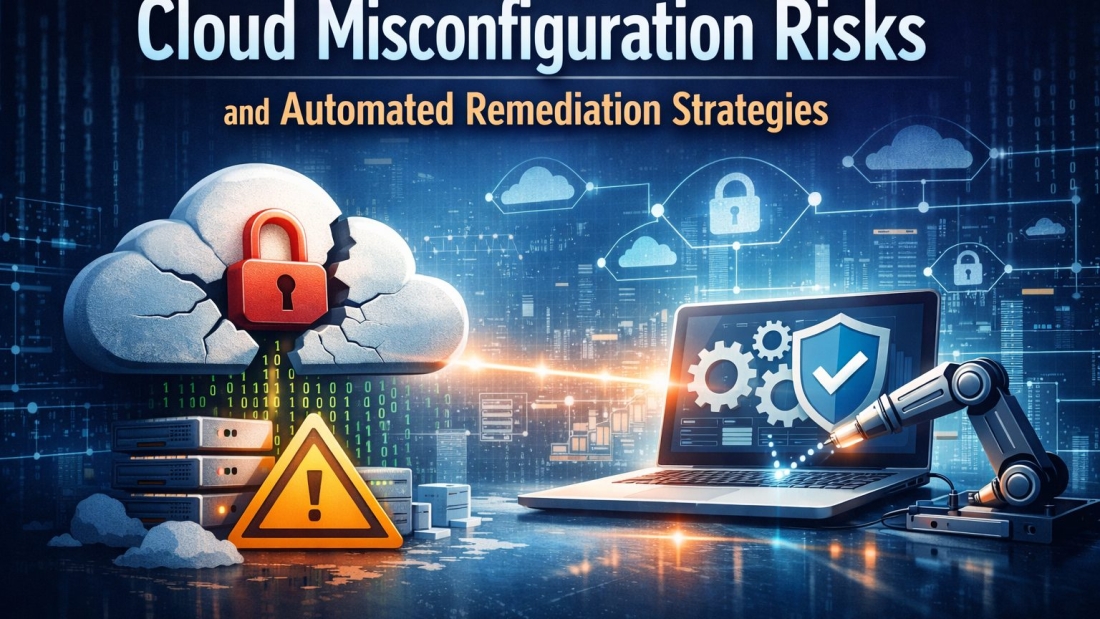
Cloud misconfiguration risks and automated remediation strategies

Cloud misconfiguration risks and automated remediation strategies

Introduction: Why Cloud Misconfiguration Is a Growing Threat

Cloud computing has transformed how businesses operate. It allows companies to scale globally in minutes, deploy applications instantly, and innovate faster than ever before. But here’s the uncomfortable truth: while the cloud is powerful, it’s also incredibly easy to misconfigure. And when that happens, the consequences can be severe. A significant percentage of cloud-related data breaches today are directly linked to configuration errors rather than sophisticated hacking techniques. In other words, attackers often don’t need to break in — they simply walk through an open door.

Think of your cloud environment as a high-tech office building. You’ve invested in smart locks, cameras, and alarms. But what if someone accidentally leaves the back door unlocked? That’s what a cloud misconfiguration looks like. It’s rarely intentional, often overlooked, and frequently catastrophic. As organizations adopt multi-cloud and hybrid architectures, complexity increases, and with complexity comes risk. This is why understanding cloud misconfiguration risks and implementing automated remediation strategies has become a top priority for security leaders worldwide.


What Is Cloud Misconfiguration?

Cloud misconfiguration refers to improperly set controls, policies, or security settings in a cloud environment that expose systems to risk. These misconfigurations can occur across storage services, compute resources, identity management systems, networking components, and monitoring tools. Unlike traditional infrastructure, cloud environments are dynamic and programmable. That flexibility is powerful, but it also means mistakes can spread quickly.

A misconfiguration might involve making a storage bucket publicly accessible, granting excessive administrative privileges, disabling encryption, or leaving critical ports open to the internet. These are not complex technical failures; they are simple settings left unchecked. And yet, their impact can be massive. Cloud platforms provide shared responsibility models, meaning providers secure the infrastructure, but customers must configure their own resources securely. When organizations misunderstand this division of responsibility, gaps emerge.

Common Examples in Modern Cloud Environments

In real-world scenarios, some of the most frequent cloud misconfigurations include exposed object storage, overly broad Identity and Access Management (IAM) policies, disabled logging, and missing multi-factor authentication. Organizations sometimes deploy development resources quickly and forget to restrict access before going live. Other times, permissions accumulate over time without review, creating what security professionals call “privilege creep.”

The danger lies in scale. One incorrect template or configuration script can replicate insecure settings across dozens or hundreds of cloud resources. In a fast-moving DevOps environment, that risk multiplies rapidly. That is why visibility and automation are essential components of modern cloud security.


Why Cloud Misconfigurations Happen So Often

If cloud misconfigurations are so risky, why do they keep happening? The answer lies in human nature, operational speed, and system complexity. Cloud environments are built to encourage rapid innovation. Developers can provision servers in seconds and deploy applications globally with a few commands. But speed often outruns security oversight.

Human Error and Operational Complexity

Even experienced engineers make mistakes. A single overlooked checkbox in a configuration console can expose sensitive information. In large organizations, different teams manage different cloud accounts, leading to inconsistent standards. Without centralized governance, configurations drift away from secure baselines over time.

Complexity adds another layer of difficulty. Multi-cloud strategies involve multiple dashboards, APIs, and security models. Each provider has its own terminology and default settings. Managing all of this manually is like juggling knives — eventually, something slips.

Speed of Deployment and DevOps Culture

Modern development culture emphasizes agility and continuous delivery. Code moves from development to production quickly, sometimes multiple times per day. While this accelerates innovation, it also reduces the window for manual security reviews. When deadlines are tight, teams may prioritize functionality over configuration validation.

This is not negligence; it is operational pressure. The solution is not to slow innovation but to embed security directly into automated workflows. That is where automated remediation becomes critical.


The Real Business Impact of Misconfigurations

Cloud misconfigurations are not minor technical inconveniences. They can trigger massive data breaches, regulatory fines, and long-term brand damage. When sensitive customer data becomes publicly accessible, organizations face lawsuits, compliance investigations, and public scrutiny. Recovery costs can reach millions of dollars, especially when incident response, legal fees, and reputation repair are included.

Financial loss is often the most visible consequence, but reputational damage can be even more harmful. Customers lose trust quickly when their information is exposed. Investors question leadership decisions. Regulators may impose penalties under data protection laws. Beyond immediate costs, there is also operational disruption. Systems must be audited, patched, and reconfigured, slowing down business momentum.

The truth is simple: prevention costs far less than remediation after a breach. That is why organizations are investing heavily in automated detection and correction strategies.


The Most Common Types of Cloud Misconfigurations

Public Storage and Data Exposure

Publicly accessible storage is one of the most common and dangerous misconfigurations. Object storage services often allow administrators to configure access levels. A simple misclick can expose confidential data to the entire internet. Attackers routinely scan cloud environments looking for these open buckets.

The problem becomes worse when backups, logs, or archived data are stored insecurely. Organizations may believe the data is internal, but without proper access controls, it becomes accessible globally.

Excessive Permissions and Identity Risks

Another critical issue involves overly permissive IAM roles. When users or services have more access than necessary, attackers can exploit those privileges to escalate their reach. The principle of least privilege is often ignored because broad permissions make development easier. But convenience creates vulnerability.

Identity misconfigurations are particularly dangerous because they enable lateral movement within the environment. Once inside, an attacker can access databases, modify configurations, or disable logging.

Network and Encryption Gaps

Open ports, unrestricted inbound traffic, and missing encryption are additional risks. Cloud networks are highly configurable, but improper firewall rules can expose internal services. Encryption gaps leave data vulnerable both at rest and in transit.

These weaknesses may not cause immediate failure, but they create silent exposure. Over time, attackers discover and exploit them.


Traditional Detection Methods vs Modern Cloud Security

Traditional security approaches relied on periodic audits and manual reviews. Security teams would examine configurations quarterly or annually. In static data center environments, this approach was manageable. In the cloud, it is insufficient.

Cloud environments change daily. New resources appear, settings shift, and services scale automatically. Manual reviews cannot keep up. Modern security tools provide continuous scanning, real-time alerts, and automated risk scoring. They integrate directly with cloud APIs to maintain visibility across all accounts and regions.

Without automation, misconfigurations remain undetected for weeks or months. That delay increases the window of opportunity for attackers.


Understanding Cloud Security Posture Management (CSPM)

Cloud Security Posture Management solutions continuously assess cloud configurations against predefined security benchmarks. They identify deviations from best practices and flag risky settings immediately. Instead of relying on humans to check every configuration, CSPM platforms automate that process.

Continuous Monitoring and Policy Enforcement

CSPM tools evaluate configurations against compliance frameworks and internal security policies. If a storage bucket becomes public or encryption is disabled, alerts are generated instantly. Some advanced platforms even provide automated remediation options, allowing organizations to fix issues automatically.

This constant vigilance transforms security from reactive to proactive. Instead of responding to breaches, teams prevent them.


Infrastructure as Code (IaC) and Shift-Left Security

Infrastructure as Code allows organizations to define cloud resources through scripts and templates. This approach improves consistency and repeatability. More importantly, it enables security checks before deployment.

Shift-left security means identifying vulnerabilities early in the development lifecycle. By scanning IaC templates for insecure settings, teams can prevent misconfigurations from reaching production. It is like proofreading a document before publishing it rather than correcting errors after distribution.


Automated Remediation Strategies Explained

Automation does more than detect problems; it fixes them. Automated remediation strategies use predefined rules to correct insecure configurations instantly.

Policy-as-Code and Auto-Fix Mechanisms

Policy-as-code frameworks define security standards programmatically. When a violation occurs, automated scripts modify the configuration to restore compliance. For example, if encryption is disabled, the system can automatically enable it. If a port is exposed, it can restrict access.

This reduces response time from hours to seconds. Speed matters because attackers exploit vulnerabilities quickly.

Workflow-Based Remediation and SOAR

Security Orchestration, Automation, and Response platforms coordinate complex remediation workflows. They gather context, evaluate risk, notify stakeholders, and apply fixes systematically. Automation does not remove human oversight; it enhances efficiency.

By combining detection with orchestrated response, organizations minimize exposure windows.


Identity and Access Automation for Least Privilege

Automated identity governance tools monitor permissions continuously. They detect unused privileges, recommend access reductions, and enforce least privilege policies. Over time, this reduces privilege creep.

Automation also supports multi-factor authentication enforcement and suspicious login detection. By strengthening identity controls, organizations close one of the most common attack paths.


Integrating Automation into DevSecOps Pipelines

Security must integrate seamlessly into development workflows. Automated checks in CI/CD pipelines ensure configurations meet security standards before deployment. Developers receive immediate feedback, allowing quick correction.

This collaboration between development, operations, and security creates a culture of shared responsibility. Instead of acting as gatekeepers, security teams become enablers of safe innovation.


Artificial Intelligence in Cloud Security Automation

Artificial intelligence enhances cloud security by analyzing patterns and detecting anomalies. Machine learning models identify unusual configuration changes or suspicious behavior. AI-driven systems can prioritize risks based on context, reducing alert fatigue.

In complex multi-cloud environments, AI helps interpret massive volumes of data. It transforms raw logs into actionable insights, guiding automated remediation decisions.


Challenges of Automated Remediation

Automation is powerful, but it is not perfect. False positives can trigger unnecessary changes. Over-automation may disrupt legitimate operations. Integration between tools can be complex.

Organizations must balance automation with oversight. Testing remediation workflows in staging environments prevents unintended consequences. Clear governance policies ensure automation aligns with business objectives.


Best Practices for Effective Cloud Misconfiguration Management

Successful organizations follow structured approaches. They maintain centralized visibility, enforce least privilege, use Infrastructure as Code, and implement continuous monitoring. They also review configurations regularly and train teams on secure practices.

Automation should be phased and measured. Start with high-risk misconfigurations, validate remediation workflows, and expand gradually. Security maturity evolves over time.


Compliance Frameworks and Automation Alignment

Regulatory frameworks require secure configurations. Automation simplifies compliance by mapping controls to standards and generating audit-ready reports. Instead of scrambling during audits, organizations maintain continuous compliance.

This alignment reduces stress and strengthens overall governance.


Cloud environments will continue growing in complexity. Serverless architectures, containers, and edge computing introduce new configuration surfaces. Automation will become smarter, leveraging predictive analytics and contextual awareness.

Zero-trust architectures will further reduce reliance on perimeter security. As organizations embrace cloud-native designs, security will become embedded in code and automated by default.


Conclusion

Cloud misconfiguration remains one of the most significant risks in modern IT environments. It stems from speed, complexity, and human oversight. Yet the solution is not slowing innovation; it is strengthening automation. By implementing continuous monitoring, Infrastructure as Code validation, policy-as-code enforcement, and intelligent remediation workflows, organizations drastically reduce exposure.

Automation transforms security from reactive firefighting into proactive risk management. When detection and remediation operate in real time, cloud environments become resilient rather than vulnerable. The future of cloud security lies not in manual oversight but in intelligent, automated protection.

How Ransomware-as-a-Service (RaaS) Is Evolving in 2026

How Ransomware-as-a-Service (RaaS) Is Evolving in 2026

Understanding the Foundations of RaaS

What RaaS Really Means in 2026

If you think ransomware is just hackers locking files and demanding money, think again. In 2026, Ransomware-as-a-Service (RaaS) looks less like a random cybercrime and more like a structured startup ecosystem—except the product is digital chaos. The model works almost like SaaS platforms you use every day. Developers build sophisticated ransomware tools, then affiliates rent or subscribe to use them. In exchange, developers take a percentage of every successful attack. It’s disturbingly organized.

What makes 2026 different is the scale and professionalism. RaaS groups now provide dashboards, technical support, attack analytics, and even onboarding tutorials for new affiliates. Imagine logging into a portal where you can track infection rates, victim engagement, and ransom payment status in real time. That’s the level of maturity we’re dealing with. Cybercrime has gone corporate.

The barrier to entry has dropped dramatically. You no longer need elite coding skills to launch a devastating ransomware campaign. With RaaS kits bundled and ready, even low-level criminals can execute advanced attacks. That accessibility is fueling a surge in global ransomware incidents, making it one of the most persistent cybersecurity threats in 2026.

How the Affiliate Model Became a Criminal Franchise

The affiliate model has turned ransomware into a franchise operation. Developers focus on building advanced encryption tools, stealth techniques, and exploit frameworks. Affiliates handle distribution—phishing campaigns, credential theft, exploiting unpatched systems. It’s a division of labor that maximizes efficiency.

Revenue sharing typically ranges between 60% to 80% for affiliates, depending on performance. Top performers gain access to premium tools, early exploit releases, and private forums. The ecosystem rewards productivity, just like a sales organization would.

What’s fascinating—and terrifying—is how performance metrics now drive cybercrime strategy. Affiliates compare notes in underground forums, share best practices, and optimize social engineering scripts. The criminal world has adopted business intelligence principles. In 2026, ransomware isn’t chaotic. It’s optimized.

The Technological Evolution of RaaS

AI-Powered Ransomware Attacks

Artificial intelligence has supercharged ransomware operations. AI tools now automate phishing email creation, making messages hyper-personalized and nearly impossible to distinguish from legitimate communication. Instead of generic spam, victims receive emails tailored to their role, company structure, and recent activity.

Machine learning algorithms analyze stolen data before encryption. This allows attackers to identify high-value assets and sensitive documents instantly. Rather than encrypting everything, attackers selectively target mission-critical systems to maximize leverage.

AI also improves evasion. Malware adapts in real time, modifying its behavior if it detects security monitoring tools. It’s like a burglar who changes disguise every time a camera spots him. In 2026, ransomware doesn’t just attack—it learns.

Automation and Zero-Day Exploits

Automation has eliminated much of the manual effort once required in cyberattacks. Vulnerability scanning, exploitation, lateral movement, and data exfiltration can now occur within hours instead of weeks. Speed is the new weapon.

RaaS groups increasingly invest in zero-day exploits—previously unknown software vulnerabilities. These exploits are either purchased from underground brokers or developed in-house. Once integrated into ransomware kits, affiliates can deploy them instantly across multiple targets.

Malware Customization at Scale

Customization used to require technical skill. Now, affiliates can choose encryption methods, ransom note templates, and targeting preferences through simple configuration panels. Want to target healthcare? Select it. Prefer English-speaking regions? Adjust the filter.

This modular design makes each attack slightly different, complicating detection efforts. Security solutions that rely on signature-based detection struggle to keep up because no two ransomware payloads look identical anymore.

Target Shifts in 2026

Critical Infrastructure Under Siege

Hospitals, energy grids, transportation systems—these sectors are increasingly targeted because downtime is unacceptable. Attackers understand urgency equals payment. When lives or national operations are at risk, organizations often feel forced to negotiate quickly.

The psychological leverage is immense. Disrupting essential services creates pressure not only internally but also politically. Governments worldwide are now treating ransomware as a national security threat rather than just a financial crime.

SMEs as Prime Targets

Small and medium-sized enterprises (SMEs) are seen as soft targets. They often lack dedicated cybersecurity teams but still handle valuable data. RaaS affiliates exploit this imbalance.

SMEs are also more likely to pay quickly to resume operations. A few days of downtime can be catastrophic for smaller firms. In 2026, ransomware attacks are no longer just about massive corporations; they’re about volume and scalability.

Double, Triple, and Quadruple Extortion Tactics

Data Theft Before Encryption

Encryption alone isn’t enough anymore. Attackers steal sensitive data before locking systems. If victims refuse to pay, data is leaked publicly. This adds reputational damage to operational disruption.

This shift toward data-first attacks increases pressure exponentially. Companies now face regulatory fines, lawsuits, and customer distrust on top of operational paralysis.

DDoS and Public Shaming Campaigns

Some groups layer Distributed Denial-of-Service (DDoS) attacks onto ransomware campaigns. Others directly contact customers, partners, or media outlets to expose breaches.

It’s psychological warfare. The goal isn’t just money—it’s maximum pressure. By attacking reputation and customer trust, RaaS operators increase payment likelihood.

Cryptocurrency and Payment Evolution

Privacy Coins and Payment Obfuscation

Cryptocurrency remains the backbone of ransomware payments. However, attackers increasingly favor privacy-focused coins and mixing services to evade blockchain tracing.

Payment instructions are more complex now. Victims are guided step-by-step through acquiring cryptocurrency, often with dedicated “support representatives” assisting them. Yes, ransomware groups now have customer service desks.

Negotiation-as-a-Service

Negotiation specialists are emerging within RaaS groups. These individuals handle communication with victims, adjusting ransom demands based on perceived ability to pay.

It’s strategic. Initial demands may be high, but negotiations often result in reduced payments. The goal is maximizing actual collection rather than unrealistic demands.

RaaS Marketplaces in the Dark Web Economy

Subscription Models and Revenue Sharing

RaaS marketplaces operate similarly to SaaS platforms. Monthly subscriptions, tiered access, and performance-based incentives are common. Higher tiers offer advanced exploits and priority support.

This structured approach fuels loyalty among affiliates. The better the toolkit, the higher the earning potential.

Reputation Systems Among Cybercriminals

Reputation systems now exist within underground forums. Developers with successful track records attract more affiliates. Affiliates with proven success gain better revenue splits.

Trust, even in criminal ecosystems, drives transactions. Ironically, transparency within the dark web economy strengthens ransomware operations.

Defensive Strategies Against Modern RaaS

Zero-Trust Architecture

Organizations are adopting zero-trust security models, where no user or device is automatically trusted. Every access request requires verification.

This approach limits lateral movement within networks. Even if attackers breach one system, they struggle to move freely.

AI-Driven Threat Detection

AI isn’t just for attackers. Defensive AI tools analyze behavioral anomalies, detect unusual access patterns, and respond automatically.

Rapid detection is critical. In 2026, speed determines survival. The faster an organization isolates compromised systems, the lower the damage.

The Future of RaaS Beyond 2026

RaaS is unlikely to disappear. It will evolve further, possibly integrating deeper automation, supply chain exploitation, and geopolitical motivations. The line between cybercrime and cyberwarfare may blur even more.

Organizations must treat ransomware resilience as an ongoing strategy, not a one-time fix. Regular backups, employee training, patch management, and incident response planning are essential.

The arms race continues. As defenses strengthen, attackers innovate. Ransomware-as-a-Service in 2026 reflects a matured, business-like criminal ecosystem that thrives on accessibility, automation, and psychological pressure.

Conclusion

Ransomware-as-a-Service in 2026 isn’t just a cyber threat—it’s an organized digital industry. Powered by AI, fueled by affiliate models, and optimized through automation, it has transformed from opportunistic hacking into a scalable criminal enterprise. Attackers operate like businesses, complete with dashboards, support teams, and negotiation specialists.

The shift toward multi-layered extortion tactics and strategic targeting makes RaaS more dangerous than ever. At the same time, defensive technologies are evolving rapidly. Organizations that embrace zero-trust models, AI-driven monitoring, and proactive cybersecurity strategies stand a better chance of surviving this digital battlefield.

The reality is simple: ransomware isn’t going away. But understanding how it evolves gives us the upper hand. Awareness, preparation, and resilience are the real weapons in 2026.

Building Autonomous Threat Detection Systems Using ML

Building Autonomous Threat Detection Systems Using Machine Learning

Introduction to Autonomous Threat Detection

What Is Autonomous Threat Detection?

Imagine a security guard who never sleeps, never blinks, and learns from every single incident. That’s what autonomous threat detection systems aim to be. They monitor networks, systems, and user behavior automatically—and make decisions without waiting for human input.

Instead of reacting after damage is done, these systems predict, detect, and respond in real time. Smart, right?

Why Traditional Security Systems Fall Short

Traditional security relies on rule-based systems. If X happens, trigger Y alert. Sounds simple—but hackers don’t follow rules. They evolve.

Static rules can’t keep up with zero-day attacks, insider threats, or subtle behavioral anomalies. It’s like using a checklist to catch a master thief. You’ll miss something.

That’s where machine learning steps in.


The Rise of Machine Learning in Cybersecurity

From Rule-Based Systems to Intelligent Models

Machine learning (ML) flipped the script. Instead of telling systems what to look for, we let them learn patterns from data.

Think of it like teaching a dog tricks versus letting it observe and adapt on its own. ML models study massive datasets, detect patterns, and identify deviations that humans might overlook.

Key Benefits of Machine Learning in Threat Detection

  • Detects unknown threats
  • Reduces manual monitoring
  • Learns continuously
  • Adapts to evolving attack techniques

It’s proactive security, not reactive defense.


Core Components of an Autonomous Threat Detection System

Building such a system isn’t magic. It’s architecture, data, and strategy.

Data Collection and Integration

Everything starts with data. Logs, user activity, network packets, endpoint behavior—you name it.

Without quality data, your ML model is blind.

Data Preprocessing and Feature Engineering

Raw data is messy. You need to clean it, normalize it, and transform it into meaningful features.

Garbage in, garbage out. Always.

Model Selection and Training

Different problems require different models. Classification? Anomaly detection? Prediction?

You choose wisely—and train with labeled or unlabeled data.

Deployment and Monitoring

Once trained, the model is deployed into production. But that’s not the end. Continuous monitoring ensures it stays accurate over time.


Types of Machine Learning Used in Threat Detection

Supervised Learning

Here, models train on labeled datasets. You tell the system what’s malicious and what’s normal.

Best for:

  • Malware classification
  • Spam detection

Unsupervised Learning

No labels. The model identifies anomalies on its own.

Perfect for detecting unknown threats.

Semi-Supervised Learning

A mix of both. Useful when labeled data is limited—which is often the case in cybersecurity.

Reinforcement Learning

The system learns by trial and error. It optimizes responses based on rewards and penalties.

Think autonomous incident response.


Designing the Data Pipeline

Log Aggregation

Security logs come from everywhere—servers, firewalls, applications.

Centralizing them is crucial.

Real-Time Streaming vs Batch Processing

Real-time systems detect threats instantly. Batch processing analyzes trends over time.

Choosing the Right Architecture

Cloud-native? On-prem? Hybrid?

The architecture should align with your scalability and compliance needs.


Feature Engineering for Threat Detection

Behavioral Features

Login frequency, session duration, unusual access times.

Patterns matter.

Network-Based Features

Packet size, IP reputation, unusual traffic spikes.

Anomalies scream danger.

User Activity Patterns

Insider threats are tricky. Behavioral analytics helps catch them early.


Model Evaluation and Performance Metrics

Precision and Recall

Precision: How many detected threats are actually threats?
Recall: How many real threats did you catch?

Balance is key.

ROC-AUC and F1 Score

These metrics evaluate model performance across thresholds.

High scores = better detection capability.

Handling False Positives and Negatives

Too many false positives? Alert fatigue.
Too many false negatives? Disaster.

Optimization is critical.


Automating Response Mechanisms

Incident Classification

Once detected, classify severity.

Critical? Medium? Low?

Automated Mitigation Strategies

Block IPs. Disable accounts. Isolate endpoints.

Fast response limits damage.


Challenges in Building Autonomous Systems

Data Imbalance

Threat data is rare compared to normal data. Models may become biased.

Adversarial Attacks

Hackers try to fool ML models. Yes, even AI gets attacked.

Model Drift

Over time, patterns change. The model’s accuracy may drop.

Continuous retraining is necessary.


Scalability and Cloud Deployment

Leveraging Cloud Infrastructure

Cloud platforms provide scalability and processing power.

Ideal for big data environments.

Microservices and Containerization

Using containers improves flexibility and deployment speed.

Think modular and scalable.


Ensuring Explainability and Transparency

Why Explainable AI Matters

Security teams need to know why a threat was flagged.

Blind trust isn’t enough.

Tools for Model Interpretability

SHAP values, LIME, and other explainability tools help uncover model reasoning.

Transparency builds confidence.


Compliance and Ethical Considerations

Data Privacy Regulations

Systems must comply with regulations like GDPR and other privacy laws.

Security should never violate privacy.

Ethical AI in Security

Bias in AI models can create unfair targeting.

Responsible design is non-negotiable.


Continuous Learning and System Improvement

Feedback Loops

Security analysts validate alerts. Their feedback improves models.

Retraining Strategies

Scheduled retraining ensures the system adapts to new threats.

Autonomy doesn’t mean stagnation.


Real-World Use Cases

Intrusion Detection Systems

ML enhances IDS by identifying sophisticated attack patterns.

Fraud Detection Platforms

Banks use ML to detect suspicious transactions instantly.

Endpoint Security Solutions

Detecting ransomware behavior before encryption spreads.


AI-Driven SOCs

Security Operations Centers powered by AI reduce manual workload.

Federated Learning in Cybersecurity

Models learn from decentralized data without sharing raw data.

Privacy meets intelligence.


Conclusion

Building autonomous threat detection systems using machine learning isn’t just a tech upgrade—it’s a survival strategy. Cyber threats evolve every day. Static defenses crumble.

Machine learning offers adaptability, speed, and intelligence. But it’s not plug-and-play. It requires quality data, careful model design, continuous monitoring, and ethical consideration.

Think of it like building a digital immune system. It must learn, adapt, and respond—without harming the body it protects.

The future of cybersecurity? Autonomous, intelligent, and always learning.

Zero-Trust Architecture Implementation Roadmap for Mid-Sized Enterprises

Zero-Trust Architecture Implementation Roadmap for Mid-Sized Enterprises

Introduction to Zero-Trust Architecture

What Is Zero-Trust Architecture?

Imagine running a company where everyone inside your building is automatically trusted. Sounds risky, right? That’s exactly how traditional cybersecurity worked for years. Once you were inside the network, you were trusted.

Zero-trust flips that idea on its head.

Zero-trust architecture (ZTA) is built on one simple rule: Never trust. Always verify. Every user, device, and application must prove its identity before accessing anything—no matter where it’s coming from.

Why Traditional Security Models Fail

The old “castle-and-moat” model assumes threats come from outside. But today, attackers sneak in through phishing emails, compromised credentials, or infected devices. Once inside, they move freely.

That’s like locking your front door but leaving every room inside wide open.

Why Mid-Sized Enterprises Need Zero-Trust Now

Rising Cyber Threats and Ransomware

Mid-sized enterprises are prime targets. Why? Because they often lack enterprise-level defenses but still hold valuable data.

Ransomware attacks are no longer rare events—they’re routine business risks.

Hybrid Work and Cloud Expansion

Your employees aren’t just in the office anymore. They’re at home, in cafes, traveling—and accessing cloud apps from everywhere.

Increased Attack Surface

More devices, more apps, and more cloud services.

Each one is a potential entry point.

Zero-trust shrinks that risk by verifying every connection.

Core Principles of Zero-Trust

Verify Explicitly

Every request must be authenticated and authorized. Always.

Least Privilege Access

Users get access only to what they absolutely need. Nothing more.

Assume Breach

Act as if attackers are already inside. It sounds paranoid—but it’s practical.

Step 1 – Assess Current Security Posture

Asset Inventory

You can’t protect what you don’t know exists. List every device, application, server, and cloud workload.

Risk Assessment

Identify vulnerabilities. Where are the weak points?

Identifying Critical Data

What data would hurt most if stolen? Customer records? Financial data? IP?

Start there.

Step 2 – Define the Zero-Trust Strategy

Business Objectives Alignment

Security must support business goals—not block them.

Executive Buy-In

Without leadership support, your roadmap dies on paper.

Governance Framework

Create clear policies, responsibilities, and compliance standards.

Step 3 – Strengthen Identity and Access Management (IAM)

Identity is the new perimeter.

Multi-Factor Authentication (MFA)

Passwords alone are fragile. MFA adds another lock to the door.

Role-Based Access Control (RBAC)

Access based on roles, not guesswork.

Privileged Access Management (PAM)

Admins are high-value targets. Lock down their privileges tightly.

Step 4 – Implement Network Segmentation

Micro-Segmentation Explained

Break your network into smaller zones. If one segment is breached, others stay protected.

Like watertight compartments on a ship.

Software-Defined Perimeter (SDP)

Hide internal systems from public view. No visibility, no target.

Secure Remote Access

Use secure gateways and VPN alternatives that verify user and device context.

Step 5 – Secure Endpoints and Devices

Endpoint Detection and Response (EDR)

Real-time threat detection on devices.

Mobile Device Management (MDM)

Control company data on mobile devices.

Device Compliance Monitoring

Only compliant devices get access.

Step 6 – Protect Applications and Workloads

Cloud Security Controls

Apply zero-trust policies to SaaS and cloud apps.

API Security

APIs are digital doorways. Secure them tightly.

DevSecOps Integration

Build security into development from day one.

Step 7 – Continuous Monitoring and Analytics

Security Information and Event Management (SIEM)

Centralize logs. Detect anomalies.

Behavioral Analytics

Spot unusual user behavior early.

Incident Response Planning

Prepare for the worst. Practice response drills.

Step 8 – Data Protection and Encryption

Data Classification

Not all data is equal. Label it.

Encryption at Rest and in Transit

Encrypt everywhere.

Data Loss Prevention (DLP)

Prevent sensitive data from leaving unauthorized channels.

Step 9 – Automate and Integrate Security Tools

Security Orchestration (SOAR)

Automate response workflows.

Policy Automation

Reduce manual enforcement.

Reducing Human Error

Automation limits mistakes.

Step 10 – Train Employees and Build Security Culture

Security Awareness Programs

People are your first line of defense.

Phishing Simulations

Test readiness regularly.

Insider Threat Mitigation

Monitor risky behavior early.

Measuring Success and Optimization

Key Performance Indicators (KPIs)

Track metrics like incident response time and unauthorized access attempts.

Continuous Improvement

Zero-trust is a journey, not a project.

Common Challenges in Zero-Trust Implementation

Budget Constraints

Start small. Prioritize high-risk areas.

Legacy Systems

Gradually modernize.

Change Resistance

Communicate benefits clearly.

Future of Zero-Trust in Mid-Sized Enterprises

AI-Driven Security

AI enhances threat detection speed and accuracy.

Zero-Trust as a Service

Managed services make adoption easier.

Conclusion

Zero-trust architecture isn’t just another IT trend. It’s a survival strategy.

For mid-sized enterprises, the question isn’t whether to adopt zero-trust. It’s how fast you can implement it.

Start with identity. Segment your network. Monitor continuously. Automate smartly.

Security is no longer about building higher walls. It’s about checking every door, every time.

How ML improves energy consumption forecasting models

How machine learning improves energy consumption forecasting models

Introduction to Energy Consumption Forecasting

Why Energy Forecasting Matters Today

Imagine running a city without knowing how much electricity people will need tomorrow. Sounds chaotic, right? That’s exactly why energy consumption forecasting matters. Power plants, grid operators, and businesses rely on accurate predictions to keep the lights on—literally.

Energy forecasting helps utilities balance supply and demand. Too much power? Waste. Too little? Blackouts. In a world moving toward renewable energy and smart grids, precision is no longer optional—it’s essential.

The Growing Complexity of Energy Demand

Energy demand isn’t what it used to be. We now have electric vehicles, smart homes, rooftop solar panels, and data centers consuming massive amounts of power. Weather patterns are shifting. Human behavior changes rapidly.

Traditional models struggle to keep up. This is where machine learning steps in like a supercharged brain.


Traditional Energy Forecasting Methods

Statistical Models and Their Limitations

For decades, forecasting relied on linear regression and time-series models like ARIMA. These methods worked well when patterns were stable and predictable.

Traditional models assume relationships are simple. Reality says otherwise.

Why Legacy Models Struggle with Modern Data

Legacy systems can’t process massive streams of smart meter data efficiently. They don’t adapt quickly to sudden changes like heatwaves or economic disruptions.

Think of them as calculators in a world that now requires supercomputers.


What is Machine Learning?

Core Concepts of Machine Learning

Machine learning (ML) is a subset of artificial intelligence where systems learn from data instead of being explicitly programmed.

Instead of telling a model, “Energy increases when temperature rises,” you feed it data. The model discovers patterns on its own.

Supervised vs. Unsupervised Learning

In supervised learning, models are trained using labeled data—like historical energy usage and known outcomes.

Unsupervised learning, on the other hand, finds hidden patterns without predefined labels. It’s like uncovering secrets buried in data.


The Role of Machine Learning in Energy Forecasting

Pattern Recognition at Scale

Machine learning thrives on patterns. It can detect subtle correlations between temperature, humidity, holidays, and electricity demand—patterns humans might miss.

And it does this across millions of data points.

Learning from Historical and Real-Time Data

ML models continuously learn. They adapt as new data flows in from smart meters, IoT sensors, and weather systems.

The result? Forecasts that improve over time instead of becoming outdated.


Types of Machine Learning Models Used

Regression Models

Advanced regression models like Support Vector Regression capture nonlinear relationships better than traditional linear regression.

They’re like upgraded tools—more flexible and precise.

Decision Trees and Random Forest

Decision trees break problems into smaller decisions. Random forests combine multiple trees for stronger predictions.

Think of it as consulting multiple experts instead of relying on one opinion.

Neural Networks and Deep Learning

Neural networks mimic the human brain. They process layers of data to detect complex relationships.

Recurrent Neural Networks (RNN)

RNNs are designed for sequential data, making them ideal for time-series forecasting.

Long Short-Term Memory (LSTM) Models

LSTM models remember long-term dependencies. They understand how last winter’s energy usage might influence this year’s patterns.

That memory is powerful.


Key Data Sources for Energy Forecasting

Smart Meter Data

Smart meters provide real-time consumption data at granular levels. This data fuels ML models with detailed insights.

Weather and Environmental Data

Temperature, wind speed, humidity, and solar radiation heavily impact energy demand.

ML integrates this seamlessly.

Economic and Behavioral Data

Economic growth, population trends, and even major events affect consumption. ML models can incorporate all of it.


Benefits of Machine Learning in Energy Forecasting

Higher Accuracy

Studies consistently show ML-based models outperform traditional methods in prediction accuracy.

Less guesswork. More precision.

Real-Time Adaptability

Sudden heatwave? Unexpected event? ML adapts quickly without manual recalibration.

Scalability

From a single building to an entire national grid, ML scales effortlessly.


Short-Term vs. Long-Term Energy Forecasting

Day-Ahead Forecasting

Day-ahead predictions help utilities plan power generation and pricing.

Accuracy here directly impacts costs.

Seasonal and Annual Predictions

Long-term forecasting supports infrastructure planning and investment decisions.

It shapes the future of energy systems.


Machine Learning and Renewable Energy Integration

Managing Solar and Wind Variability

Solar and wind are unpredictable. Cloud cover changes. Wind speeds fluctuate.

ML predicts generation patterns, reducing uncertainty.

Grid Stability Improvements

Better forecasting means fewer imbalances, fewer outages, and a more resilient grid.


Challenges in Implementing Machine Learning Models

Data Quality Issues

Poor data equals poor predictions. Cleaning and preprocessing are critical.

Model Interpretability

Some deep learning models act like “black boxes.” Understanding how they make decisions can be challenging.

Computational Costs

Training large models requires computing power. However, cloud solutions are reducing barriers.


Real-World Applications and Case Studies

Utility Companies

Utilities use ML to optimize load distribution and reduce operational costs.

Smart Cities

Smart cities leverage ML forecasting to manage street lighting, EV charging, and building efficiency.

Industrial Energy Management

Factories use ML to predict peak loads and avoid penalty charges.


The Future of AI in Energy Forecasting

Edge Computing and IoT Integration

IoT devices combined with edge computing enable real-time predictions at the source.

Faster. Smarter. More efficient.

Autonomous Energy Grids

Self-healing grids powered by AI may soon adjust automatically without human intervention.

Science fiction? Not anymore.


Best Practices for Building Effective Models

Data Preprocessing

Clean data is non-negotiable.

Feature Engineering

Selecting the right variables dramatically improves performance.

Continuous Model Training

Models must evolve with changing consumption patterns.


Why Businesses Should Care About ML-Based Forecasting

Energy costs directly impact profits. Better forecasting means better budgeting, reduced waste, and smarter investments.

Would you rather guess your expenses—or predict them accurately?

Machine learning turns uncertainty into strategic advantage.


Conclusion

Energy consumption forecasting has entered a new era. Traditional methods served their purpose, but the complexity of modern energy systems demands something smarter.

Machine learning brings adaptability, precision, and scalability to forecasting models. It learns from massive datasets, adapts to real-time changes, and improves over time. From integrating renewable energy to stabilizing smart grids, ML is reshaping how we predict and manage energy demand.

In a world racing toward sustainability and digital transformation, machine learning isn’t just improving forecasting—it’s redefining it.

Web & App Development Trends That Will Rule in 2026

Web & App Development Trends That Will Rule in 2026

Introduction to the Future of Development

Technology doesn’t just evolve—it explodes forward. And 2026? It’s shaping up to be a massive leap for web and app development.

If 2023 was about experimentation and 2024–2025 were about adaptation, 2026 is about domination. The tools are smarter. The users are sharper. And expectations? Sky-high.

Let’s break down what’s coming—and what you absolutely can’t ignore.

Why 2026 Is a Game-Changer

Think of development like driving a car. A few years ago, you were manually shifting gears. Now? AI is sitting in the passenger seat giving directions. In 2026, it’s practically co-driving.

Businesses aren’t just asking for apps. They want intelligent ecosystems. Fast. Secure. Personalized. Everywhere.

The Shift from Traditional to Intelligent Systems

Static websites are fading. Basic mobile apps? Not enough. The new era is intelligent, predictive, and automated. Systems now learn from users instead of just serving them.

That’s a big shift.


AI-First Development Becomes the Standard

AI isn’t a feature anymore. It’s the foundation.

AI-Powered Coding Assistants

Developers now collaborate with AI tools that generate, optimize, and debug code in seconds. What used to take hours now takes minutes.

From Code Suggestions to Code Generation

In 2026, AI won’t just suggest lines of code—it will build entire components. Need a dashboard? A payment module? Done.

Developers move from writing code to supervising intelligence.

AI-Driven UX Personalization

Apps will adjust layouts, colors, and content automatically based on user behavior. Imagine Netflix-level personalization—but everywhere.


Hyper-Personalized User Experiences

Users expect apps to “know” them.

Real-Time Data Adaptation

Apps will adapt instantly based on browsing habits, location, and preferences. It’s like walking into a store where everything is arranged just for you.

Behavioral Prediction Engines

Before a user clicks, the system already predicts what they want. Smart? Yes. Powerful? Even more.


Progressive Web Apps (PWAs) 2.0

PWAs are not new—but in 2026, they’ll dominate.

Offline-First Architecture

Apps that work perfectly without internet? That’s becoming standard. Offline-first design ensures smooth experiences anywhere.

App-Like Experience Without Downloads

No app store. No heavy downloads. Just instant access from a browser.

Convenience wins.


Web3 and Decentralized Applications (dApps)

Web3 is maturing.

Blockchain Integration in Web Apps

From finance to identity verification, blockchain-backed apps will become common. Transparency and security are major selling points.

Decentralized Identity Systems

Users control their data—not corporations. That’s a powerful shift in trust dynamics.


Low-Code and No-Code Platforms Evolve

Coding is no longer limited to developers.

Empowering Non-Developers

Business teams can now build internal tools without writing complex code. Drag, drop, deploy.

Enterprise-Grade Low-Code Solutions

In 2026, low-code platforms won’t just be simple builders. They’ll handle large-scale enterprise systems.


API-First and Headless Architecture

Flexibility is everything.

The Rise of Headless CMS

Front-end and back-end are separated. That means faster performance and more customization.

Microservices and Modular Development

Instead of one massive system, apps are built as smaller, independent services. Easier updates. Faster scaling.


Super Apps and Everything-in-One Platforms

Why download 10 apps when one can do it all?

The Asian Market Influence

Super apps are already thriving in Asia. By 2026, the global market will follow.

Integration of Payments, Messaging & Commerce

Messaging, payments, shopping—all inside one ecosystem. It’s convenience on steroids.


Advanced Cybersecurity by Design

Security isn’t optional anymore.

Zero Trust Architecture

Trust nothing. Verify everything. That’s the model.

AI-Based Threat Detection

AI monitors systems 24/7, detecting threats before they cause damage.


Voice and Conversational Interfaces

Typing is optional now.

Voice Commerce

Ordering products using voice commands will become common.

AI Chat Interfaces in Apps

Every app becomes conversational. Instead of menus, users simply ask.


5G and Edge Computing Integration

Speed changes everything.

Real-Time App Performance

With 5G, apps load instantly. No lag. No waiting.

Edge-Based Processing

Data processing moves closer to users, reducing latency and boosting performance.


Sustainable and Green Coding

Yes, even code has a carbon footprint.

Energy-Efficient Development Practices

Developers will optimize code not just for speed—but for energy efficiency.

Carbon-Aware Hosting

Cloud providers now offer sustainability metrics. Businesses care—and users do too.


Motion UI and Immersive Design

Flat designs are fading.

Micro-Interactions

Small animations guide users smoothly through experiences.

AR/VR in Web Experiences

Immersive experiences will blend physical and digital worlds.


Cross-Platform Development Dominance

Time is money.

Unified Codebases

One codebase for web, iOS, and Android. Faster development cycles.

Faster Go-To-Market Strategies

Companies launch products in weeks—not months.


Conclusion

2026 isn’t about minor upgrades. It’s about transformation.

AI will lead development. Personalization will define user experience. Security will be built-in. Sustainability will matter. And speed? Non-negotiable.

The question isn’t whether these trends will happen.

The real question is: will you adapt fast enough?

Designing high-availability IT infrastructure for mission-critical industries

Designing high-availability IT infrastructure for mission-critical industries

High-availability IT infrastructure isn’t just a technical upgrade. It’s survival.

If you’re running a hospital, a bank, a power grid, or a manufacturing plant, downtime isn’t annoying — it’s dangerous.

So how do you design systems that simply don’t fail?

Let’s break it down step by step.


Introduction to High-Availability Infrastructure

What Does High Availability Really Mean?

High availability (HA) means your systems stay up and running — almost all the time.

We’re talking about 99.9%, 99.99%, or even 99.999% uptime. That last one? It’s called “five nines.” And it allows only about five minutes of downtime per year.

Think of it like a heart. If it stops for even a few minutes, everything collapses. That’s how critical HA systems are.

Why Mission-Critical Industries Can’t Afford Downtime

For some industries, downtime isn’t just inconvenient — it’s catastrophic.

  • A hospital system crash can delay life-saving treatment.
  • A banking outage can freeze millions in transactions.
  • A power grid failure can shut down entire cities.

High availability isn’t optional. It’s mandatory.


Understanding Mission-Critical Industries

Healthcare and Life-Saving Systems

Hospitals rely on digital records, imaging systems, and patient monitoring tools. If systems go offline, patient care suffers instantly.

Financial Services and Real-Time Transactions

Banks process thousands of transactions per second. If the infrastructure fails, trust disappears overnight.

Manufacturing and Industrial Automation

Factories use automated systems and IoT devices. Downtime halts production lines and costs millions per hour.

Energy, Utilities, and Public Services

Power, water, and telecom services must operate 24/7. Outages can trigger national crises.


The True Cost of Downtime

Financial Losses

Downtime can cost thousands — even millions — per minute. Lost revenue piles up fast.

Reputational Damage

Customers remember failures. Trust takes years to build but seconds to lose.

Regulatory and Compliance Risks

Industries face heavy penalties for failing to meet uptime and data protection standards.


Core Principles of High-Availability Design

Eliminate Single Points of Failure

If one server fails, another should instantly take over. No exceptions.

Single points of failure are like weak links in a chain. Remove them.

Redundancy and Fault Tolerance

Duplicate everything critical:

  • Servers
  • Storage
  • Network connections
  • Power supplies

If one fails, the backup kicks in automatically.

Scalability and Flexibility

Your infrastructure must grow with demand. Traffic spikes? No problem. Scale instantly.


Infrastructure Architecture Models

Active-Active Configuration

Both systems run simultaneously. If one fails, the other continues without interruption.

Best for ultra-critical operations.

Active-Passive Configuration

One system runs. The other waits on standby.

More affordable, but slightly slower failover.

Hybrid Cloud and Multi-Cloud Strategies

Using multiple cloud providers reduces dependency on a single vendor. If one cloud fails, another takes over.


Network Redundancy and Reliability

Multiple ISPs and Failover Routing

One internet provider isn’t enough. Always use at least two.

Automatic failover ensures seamless switching.

Load Balancing Techniques

Load balancers distribute traffic evenly across servers. No overload. No crashes.

Software-Defined Networking (SDN)

SDN adds flexibility. You can manage and reroute traffic instantly through software controls.


Data Protection and Storage Strategies

RAID and Storage Replication

RAID protects against disk failures. Replication copies data across multiple systems.

Lose one? Data still lives elsewhere.

Backup vs Disaster Recovery

Backup saves data. Disaster recovery restores entire systems.

They’re related — but not the same.

RPO and RTO Explained

  • RPO (Recovery Point Objective): How much data you can afford to lose.
  • RTO (Recovery Time Objective): How quickly you must recover.

Lower numbers mean stronger systems.


Disaster Recovery Planning

DR Sites (Hot, Warm, Cold)

  • Hot site: Fully operational backup.
  • Warm site: Partially ready.
  • Cold site: Basic infrastructure only.

Choose based on business impact.

Automated Failover Systems

Manual recovery is too slow. Automation ensures instant switching.

Regular Testing and Simulation

If you don’t test your DR plan, it’s just theory.

Simulate failures. Practice recovery.


Security as a Pillar of Availability

DDoS Protection

A DDoS attack floods systems with traffic. Strong mitigation tools are essential.

Zero Trust Architecture

Never trust by default. Verify every user, every device.

Continuous Monitoring

Threats evolve. Monitoring must be constant.


Cloud vs On-Premises for High Availability

Benefits of Cloud Infrastructure

Cloud providers offer built-in redundancy and global distribution.

Risks and Limitations

Cloud outages still happen. Shared environments introduce risks.

Hybrid Deployment Models

Combining cloud and on-prem offers flexibility and control.


Monitoring and Observability

Real-Time Monitoring Tools

Track system health continuously.

Predictive Analytics and AI

AI detects patterns and predicts failures before they happen.

Incident Response Automation

Automated alerts and scripts reduce response time dramatically.


Compliance and Regulatory Requirements

Industry Standards

Healthcare follows HIPAA. Finance follows PCI-DSS.

Compliance isn’t optional.

Documentation and Audits

Maintain logs, reports, and proof of resilience.


Performance Optimization Techniques

Capacity Planning

Forecast demand before it hits.

Auto-Scaling Systems

Scale up during peak. Scale down when idle.

Infrastructure as Code (IaC)

Automate deployments. Reduce human error.


Building a Resilient IT Culture

Training and Skill Development

Technology alone isn’t enough. Teams must be trained.

DevOps and SRE Practices

Collaboration improves uptime. Automation reduces errors.


Edge Computing

Processing data closer to users reduces latency and improves resilience.

AI-Driven Infrastructure

Self-optimizing systems are becoming reality.

Self-Healing Systems

Systems detect issues and fix themselves automatically.


Conclusion

Designing high-availability IT infrastructure for mission-critical industries isn’t about luxury — it’s about responsibility.

It’s like building a fortress — layer by layer — until failure becomes nearly impossible.

Because when lives, money, and public trust are on the line, “almost reliable” isn’t good enough.